






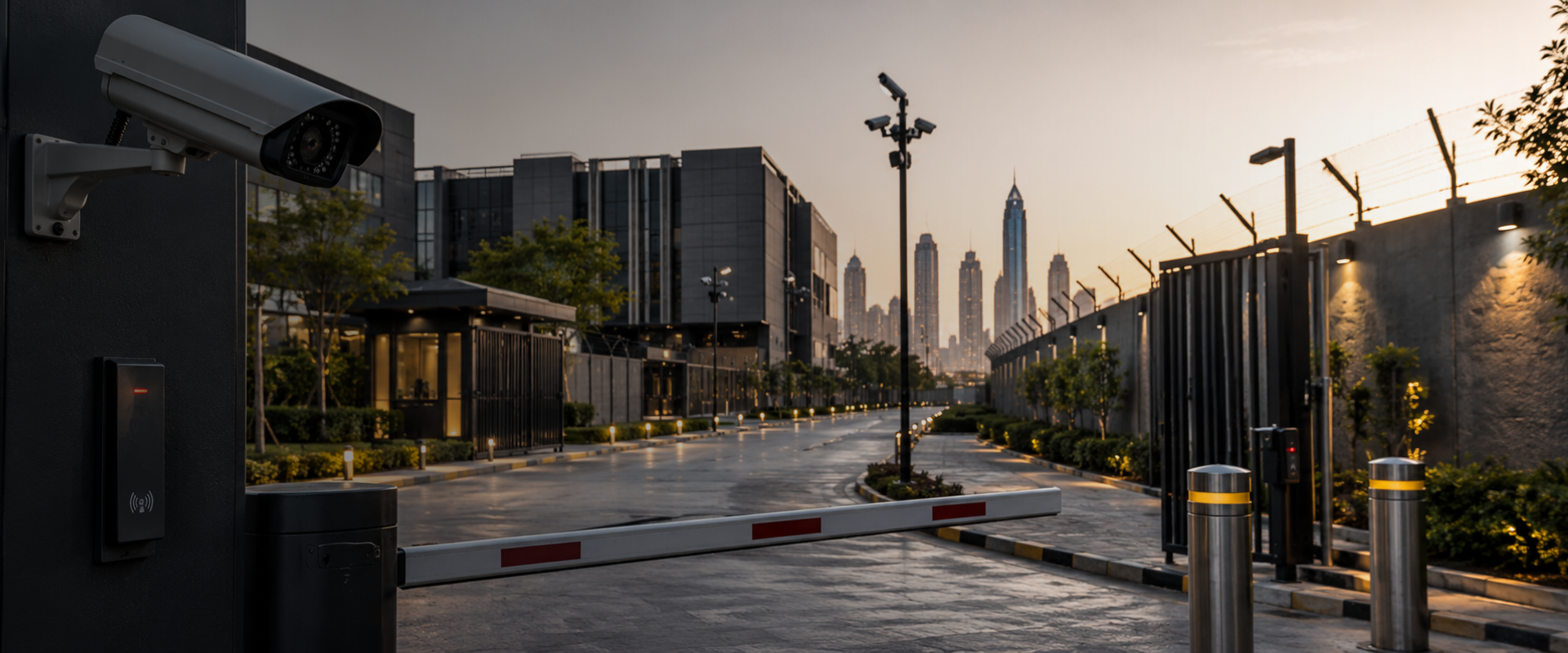
The UAE is home to many high-value facilities, including financial free zones, government offices, international airports, and critical infrastructure. Protecting these assets requires more than basic locks and CCTV cameras. Organizations need a comprehensive physical security strategy that integrates people, technology, and infrastructure to safeguard assets, ensure business continuity, and respond effectively to evolving threats.
The UAE has established one of the world’s strongest security environments through highly capable law enforcement agencies, robust regulatory frameworks, and strict compliance standards. To support this environment, organizations require security solutions that effectively address modern security risks, remain cost-effective, and adapt to changing operational requirements.
Core Pillars of Physical Security for High-Value Facilities
Perimeter Security
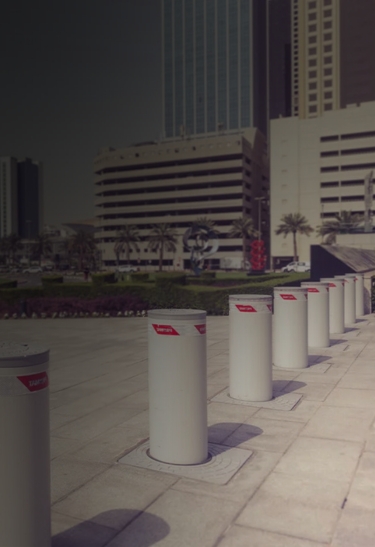
The perimeter forms the first line of defense for any secure facility. An effective perimeter security strategy combines physical barriers, intrusion detection technologies, surveillance systems, and alarm monitoring to prevent, detect, and delay unauthorized access. Security measures may include perimeter fencing, reinforced walls, security gates, bollards, and vehicle barriers to protect the site from unauthorized entry and vehicle-based threats. Detection technologies such as microwave sensors, fiber-optic sensors, and vibration monitoring systems strengthen perimeter protection by identifying intrusion attempts before attackers reach critical areas.
Access Control Systems
Modern access control systems have advanced well beyond traditional card readers and PIN codes. Today’s solutions incorporate biometric authentication, facial recognition, iris scanning, and anti-tailgating technologies to ensure that only authorized personnel can enter restricted areas. Organizations should integrate these systems with regularly updated security management platforms to maintain reliable performance and strengthen overall security. Regular testing, maintenance, and software updates help ensure that access control systems continue protecting people, assets, and sensitive facilities effectively.
Video Surveillance and Analytics
Video surveillance remains a cornerstone of modern physical security, while advances in artificial intelligence have significantly enhanced its capabilities. AI-powered video analytics enable security teams to identify suspicious behavior, detect unauthorized access, recognize abandoned objects, and respond to incidents in real time. Modern surveillance platforms automatically analyze live video feeds, allowing operators to make faster and more informed security decisions.
Intrusion Detection and Alarm Systems
Intrusion detection systems provide a critical secondary layer of protection when perimeter or access control measures fail. When an intrusion occurs, alarm systems should immediately initiate predefined response procedures instead of simply generating notifications. Integrating alarms with surveillance systems, access control platforms, and security personnel ensures consistent incident management and faster response times.
Security Operations Centre (SOC) Integration
For large and complex facilities, organizations should consolidate security systems within a centralized Security Operations Centre (SOC). A SOC gives operators a comprehensive view of security operations by integrating surveillance systems, access control platforms, intrusion detection technologies, visitor management systems, and other security applications into a single interface. Modern SOC platforms use advanced integration software to combine data from multiple systems while automating workflows and incident response procedures. This unified approach improves situational awareness, reduces response times, and enables security teams to coordinate more effectively during incidents.
Regulatory and Compliance Considerations
Security deployments within the UAE must comply with various local and sector-specific regulations. Depending on the facility type and location, regulators may require organizations to comply with standards issued by Dubai Police, Abu Dhabi Police, the Critical National Infrastructure Authority (CNIA), and other authorities governing sectors such as aviation, healthcare, finance, and government services. KTC International possesses extensive knowledge of the UAE’s regulatory landscape and incorporates compliance requirements into every stage of security system design and implementation. This approach helps organizations avoid costly modifications while maintaining full regulatory compliance.
Conclusion
Physical security for high-value facilities in the UAE requires a comprehensive, multi-layered approach supported by strategic planning, technical expertise, and operational excellence. Organizations that integrate perimeter protection, access management, surveillance, intrusion detection, visitor management, and Security Operations Centre operations into a unified security strategy achieve stronger protection, greater operational efficiency, and improved resilience against evolving threats.
With nearly three decades of regional experience, KTC International provides the consultancy, technology, and systems integration expertise needed to protect critical assets and support long-term operational resilience. We have successfully delivered security solutions across financial institutions, government facilities, airports, healthcare campuses, data centers, critical infrastructure, and luxury hospitality developments throughout the UAE and the GCC region.
Frequently Asked Questions
1. What are physical security solutions?
Answer: Physical security solutions are integrated systems designed to protect people, buildings, and critical assets from unauthorized access and security threats. They typically include CCTV surveillance, access control, perimeter security, intrusion detection, and centralized monitoring systems.
2. What is a Security Operations Centre (SOC) and does every facility need one?
Answer: A SOC centralizes surveillance, access control, and alarm data into one monitoring interface it’s most valuable for large or high-risk facilities where coordinated, real-time response is critical.
3. What systems are included in a physical security solution?
Answer: A complete physical security solution may include CCTV surveillance, access control systems, biometric authentication, ANPR systems, road blockers, bollards, intrusion alarms, perimeter detection, visitor management, and centralized security management software.
4. Can physical security solutions be customized for different industries?
Answer: Yes. Physical security solutions can be tailored for airports, commercial buildings, hospitals, educational institutions, industrial facilities, residential communities, logistics centers, and government organizations based on their specific security requirements.
5. How do integrated physical security systems improve safety?
Answer: Integrated physical security systems connect CCTV, access control, intrusion detection, and other security technologies into a single platform. This enables real-time monitoring, faster incident response, improved operational efficiency, and enhanced protection of people and assets.
5. How does KTC assess a facility’s physical needs?
Answer: KTC conducts a site assessment covering perimeter vulnerabilities, access points, surveillance coverage perimeter vulnerabilities, access points, surveillance coverage and regulatory requirements before recommending an integrated security design.







 +971 4 587 6599
 info@ktcco.net


